Welcome
You are viewing an evolving resource designed to support Fall armyworm management in New Zealand. We welcome your feedback as we continue to build and improve this site.
New Business
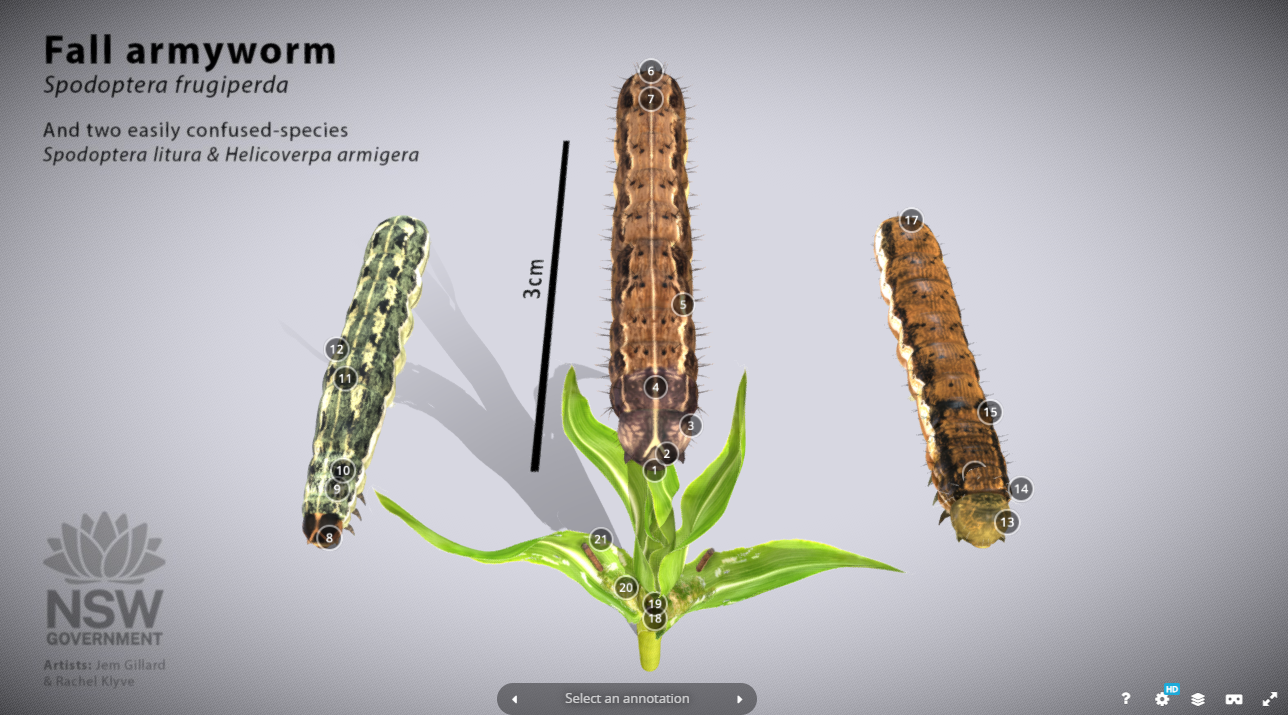
The NSW Department of Primary Industries have created this fantastic diagnostic tool. It is an interactive, annotated 3D model showing Fall armyworm caterpillar in detail. It compares FAW with two other caterpillars, Tropical armyworm (Spodoptera litura) and Corn earworm (Helicoverpa armigera), commonly misidentified as FAW.
Diagnostics - A 3D model collection - Sketchfab
© NSW Government
Created by Jem Gillard www.jemgillard.com and Rachel Klyve www.rachelklyve.com
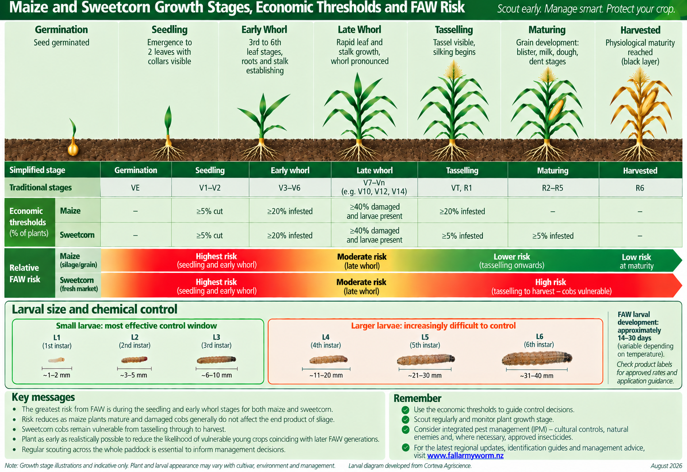
This handy two-page guide supports Fall armyworm crop scouting by helping you recognise typical feeding damage, identify Fall armyworm larvae using three key markings, and assess the crop against growth-stage economic thresholds. Print, laminate and keep it handy for use when scouting maize and sweetcorn crops.
Latest FAW Report
Fall Armyworm (FAW) Update – September 2026
Plan early for spring planting
Over the past two seasons, the most badly affected maize and sweetcorn crops have generally been those planted later in the season, particularly in late November and December.
In Northland, later planting has coincided with second-generation FAW flights, when larger pest populations have resulted in increased plant damage, greater insecticide use and reduced yields. In other regions, later-planted sweetcorn crops have also experienced higher FAW pressure, including increased damage to cobs.
Where practical, consider planting as early as conditions allow. Earlier planting can help crops establish and develop before FAW populations increase later in the season.
Key actions:
- Plan early: Consider planting maize and sweetcorn as early as practical for your location and growing conditions.
- Scout regularly: Check crops and volunteer maize for FAW larvae, particularly as temperatures increase.
- Be alert to later flights: FAW populations can increase through the season, so maintain regular crop monitoring.
- Protect yield: Early detection allows management decisions to be made before significant plant or cob damage occurs.
- Use the resources: Visit the Resources section of this website for more information on FAW seasonal patterns, identification, monitoring and management.
Planning ahead and establishing crops early, where conditions allow, can help reduce exposure to higher FAW populations later in the season.
Local information improves timing and outcomes. Your observations are important. Please report FAW activity and outcomes to ashley.mills@FAR.org.nz.
Regional Updates
Northland
- There have been no recent observations of FAW in this region.
Growth Stage Scouting Urgency — October
Auckland
- There have been no recent observations of FAW in this region
Growth Stage Scouting Urgency — October
Bay of Plenty
- There have been no recent observations of FAW in this region.
Growth Stage Scouting Urgency — October
Gisborne
- There have been no recent observations of FAW in this region.
Growth Stage Scouting Urgency — October
West Coast
- There have been no recent reports of FAW. Please get in touch if you have any reports or questions.
Growth Stage Scouting Urgency — September
Tasman
- There have been no recent reports of FAW. Please get in touch if you have any reports or questions.
Growth Stage Scouting Urgency — October
Taranaki
- There have been no recent observations of FAW in this region
Growth Stage Scouting Urgency — October
Canterbury
- There have been no recent observations of FAW in this region
Growth Stage Scouting Urgency — October
Hawke's Bay
- There have been no recent observations of FAW in this region
Growth Stage Scouting Urgency — October
Is it Fall armyworm?
There are three key characteristics used in combination that will help identify FAW.
- First, a distinct ‘Y’ on the head leading into the dorsal line.
- Second, four trapezoid patterned dots on the body segments.
- Finally, four pronounced dots in a square pattern at the rear.
Other pests may share a similar identification but not all three key markings together.
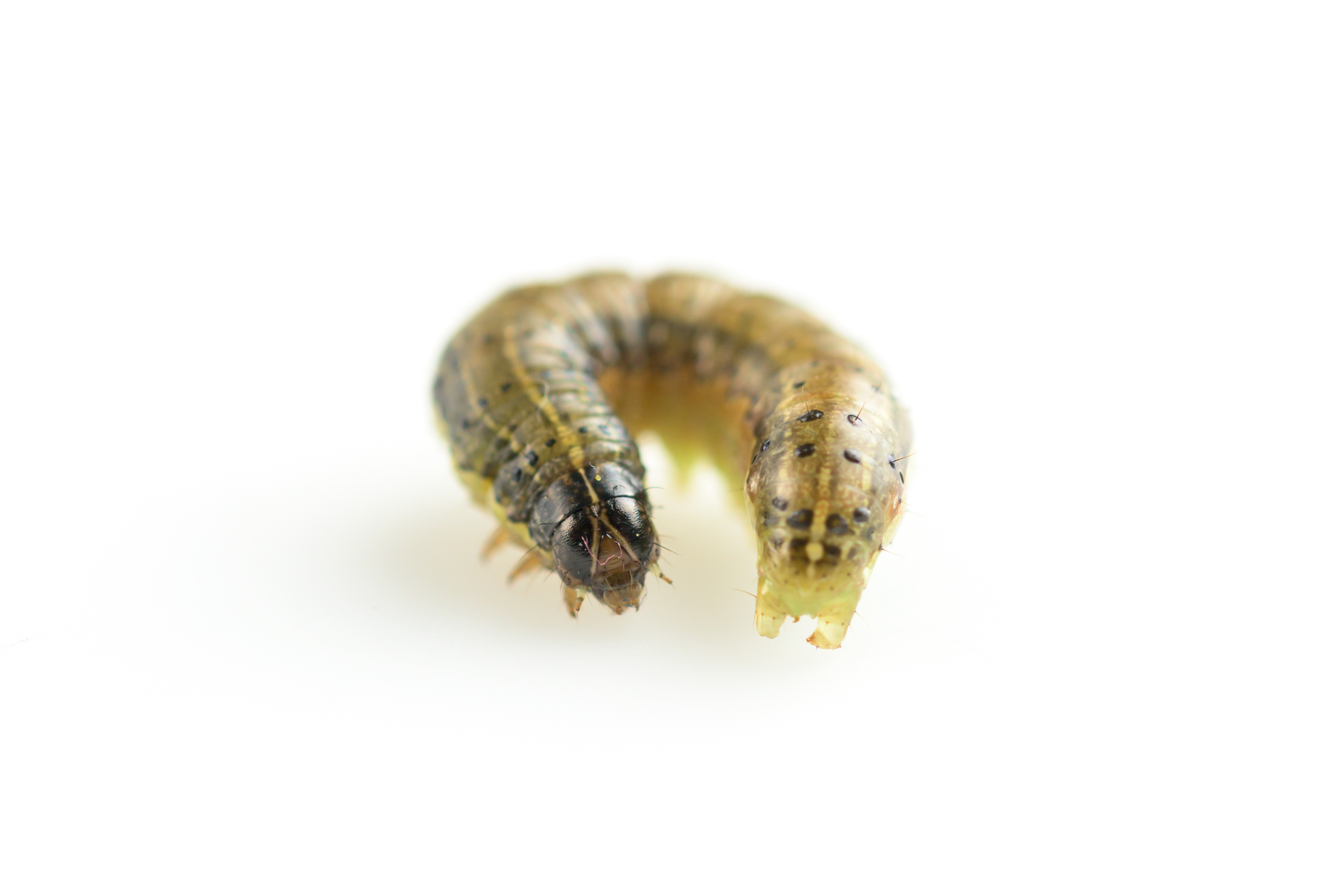
Photo courtesy Bioeconomy Science Institute (PFR)
Fall armyworm lifecycle and damage
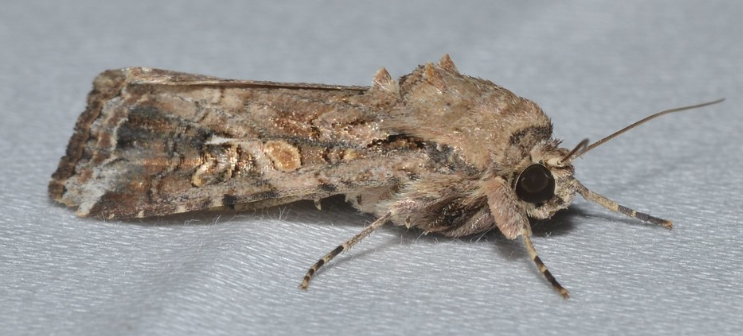
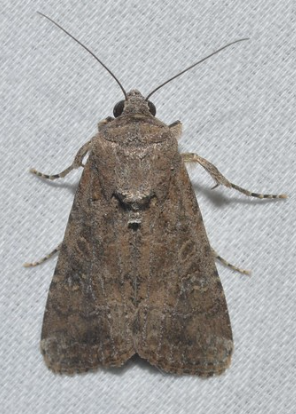
Adult Moths
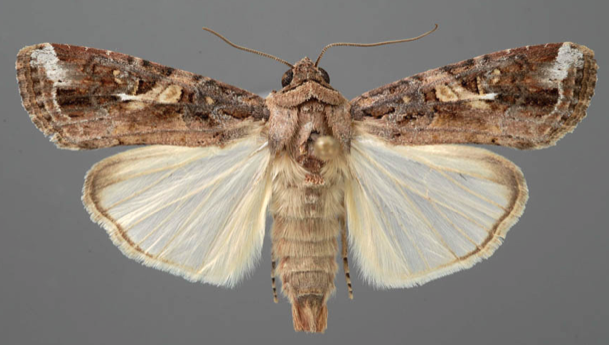
Male Fall armyworm moth
Source: Lyle Buss, University of Florida
Eggs
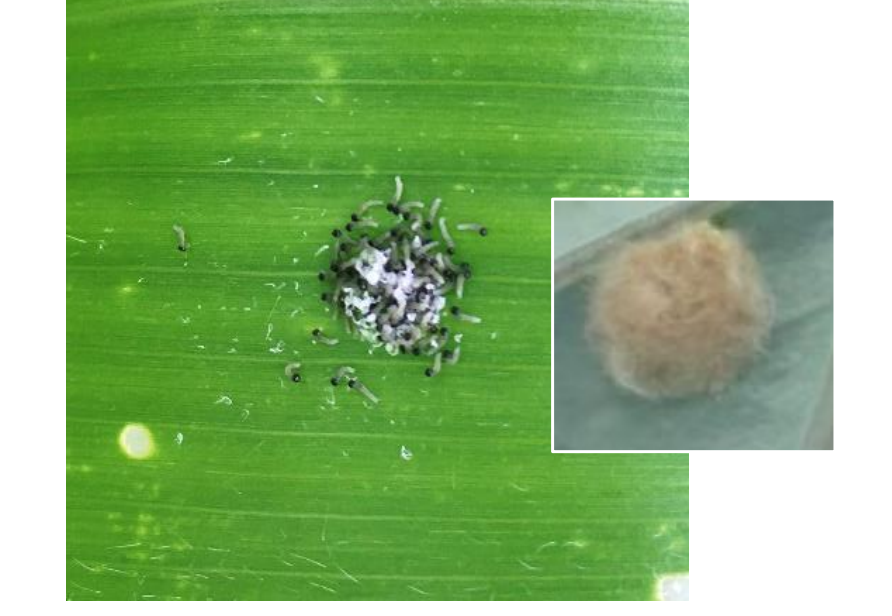
A typical FAW egg mass to the right and newly hatched neonates on the left. The term ‘neonate’ refers to newly hatched larvae in the first instar stage.
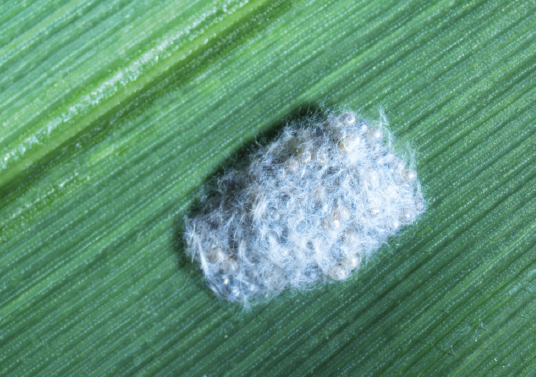
Eggs are small, <1 mm in diameter, and laid on leaf surfaces in a batch of 100–200 eggs covered with a felt of pale brown scales from the abdomen of the female moth.
Photo courtesy of Bioeconomy Science Institute (PFR)
First and Second Instars
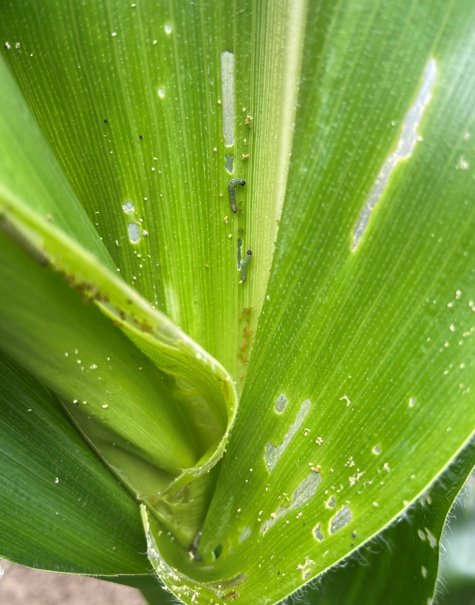
1st instar larva causing "windowpane" damage.
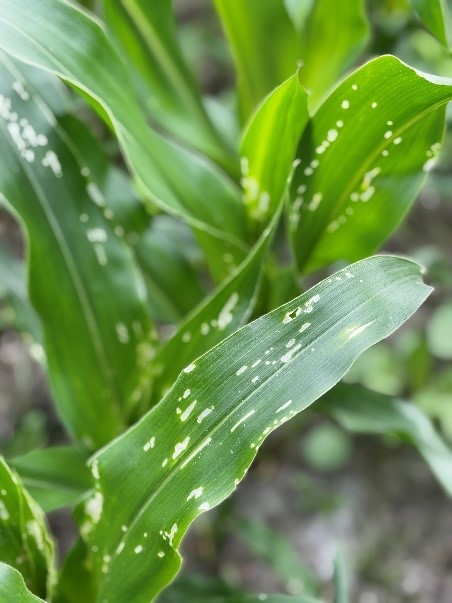
Typical early instar damage can be easy to spot in multiple plants in close proximity.
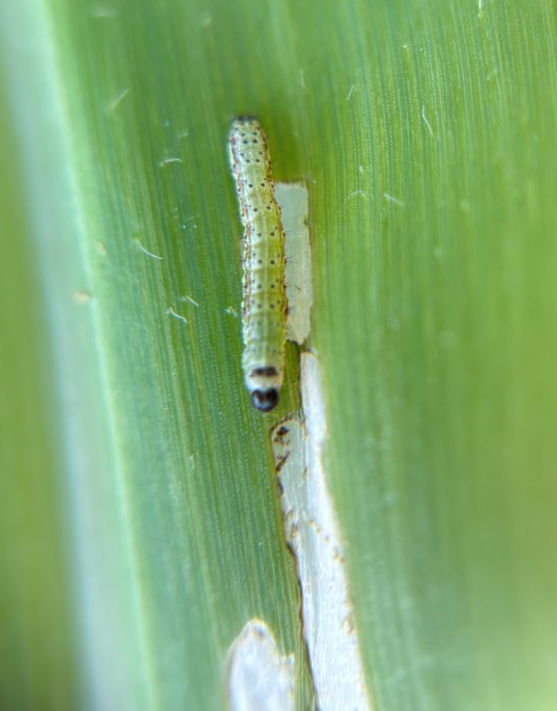
Second instar larva showing characteristics of FAW, an eyeglass is a vital piece of equipment for correctly identifying pests.
Third Instar
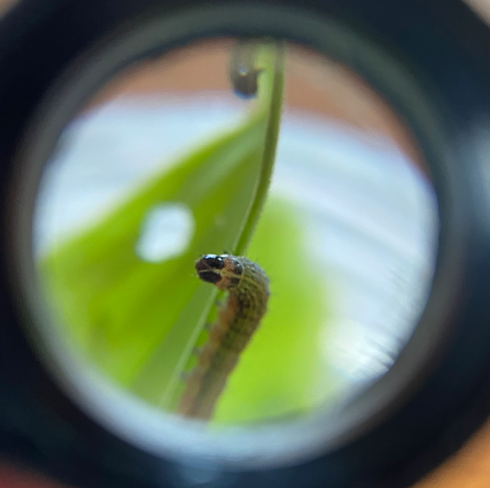
Third instar larvae begin displaying typical FAW characteristics that can be identified quickly in the field, an eyeglass can still make this easier and more accurate if uncertain.
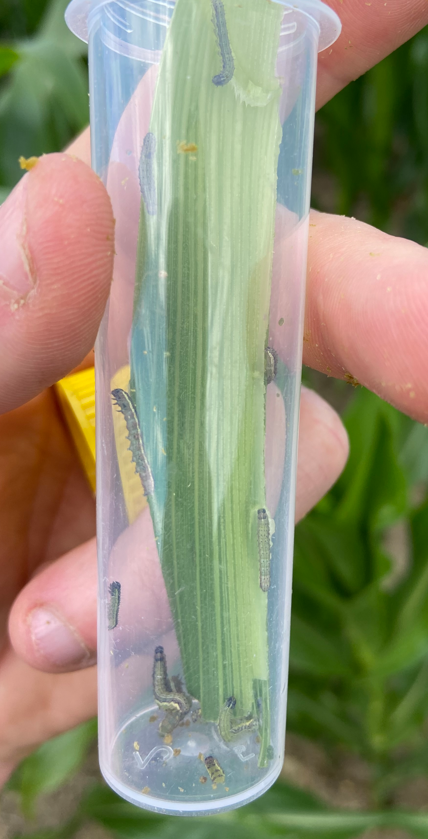
Multiple 3rd instar FAW larvae were found in just a couple of plants. At this stage, larvae are still prone in the folds of the leaves. This could be the last chance for effective chemical intervention if the economic thresholds are threatened.
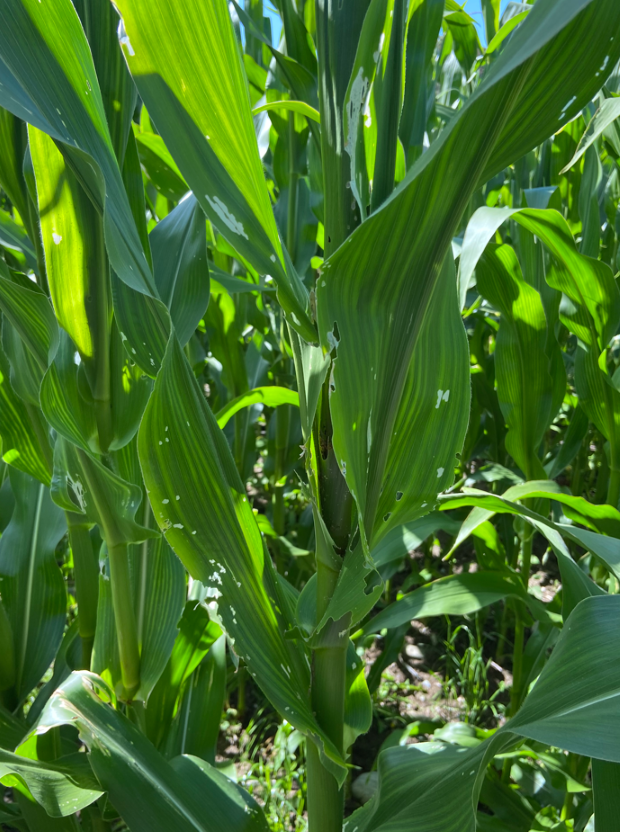
Damage becomes much more noticeable on plants. The 3rd instar caterpillars begin spreading to adjacent plants, making it more noticeable when scouting. They will soon advance to the 4th instar and begin to target the whorl.
Fourth and fifth Instars
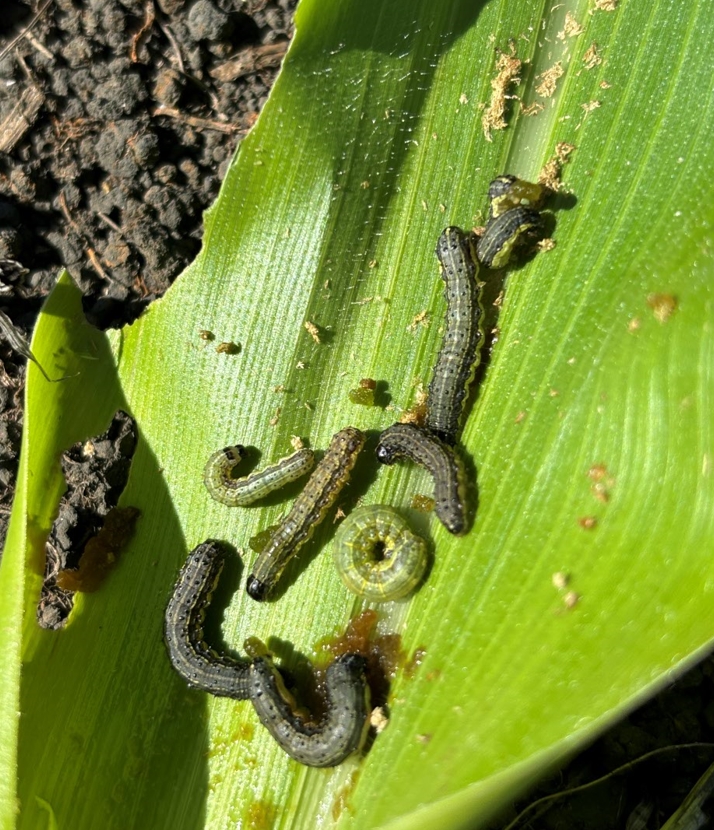
4th instar larvae of varying colour all showing the key characteristics of FAW. Each larvea was found in the whorl of 8 different adjacent plants.
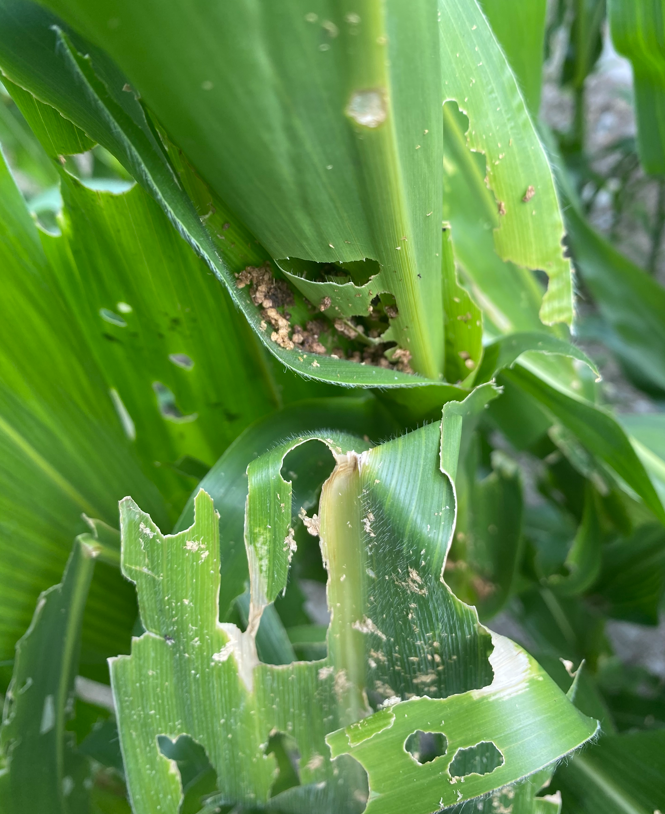
Damage becomes more severe, often appearing almost overnight as larvae increase in appetite quickly.
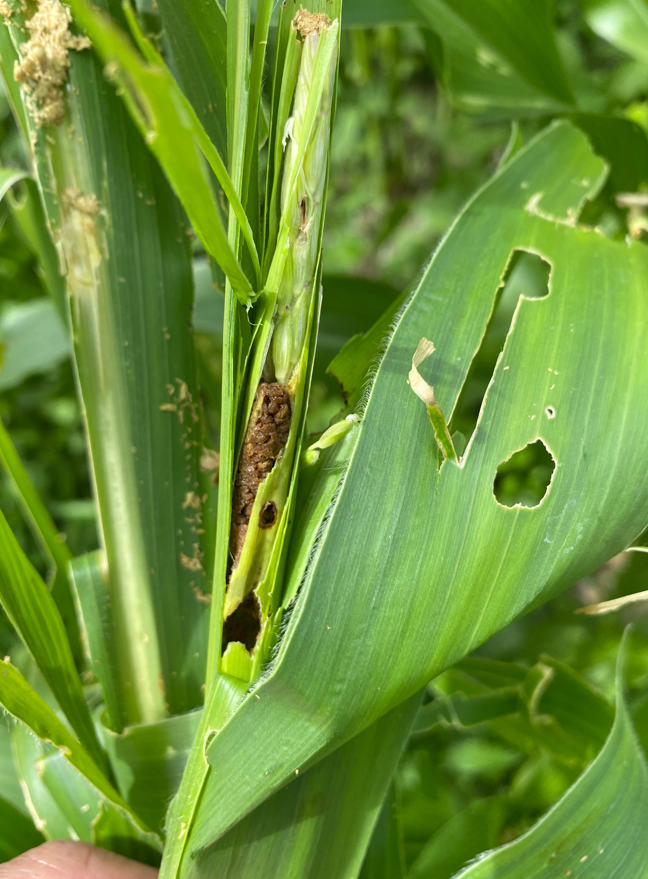
Larvae burrow deeper into the whorl, often leaving a frass "plug" behind it.
Sixth Instar
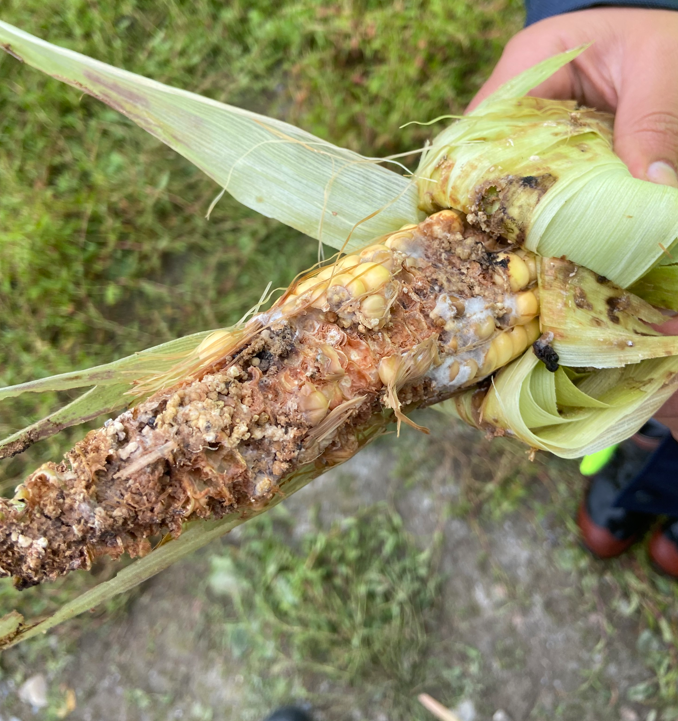
Late instar larvae grow quickly and feed ferociously as they prepare for pupation.
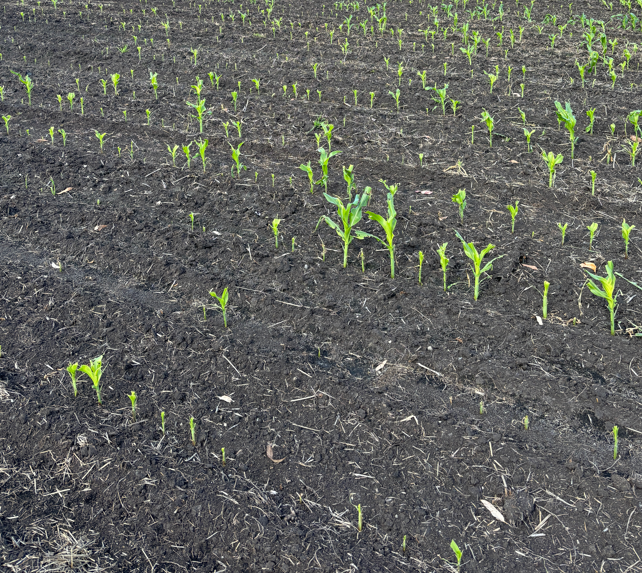
Young plants can easily be eaten to ground level when late instar FAW are hungry!
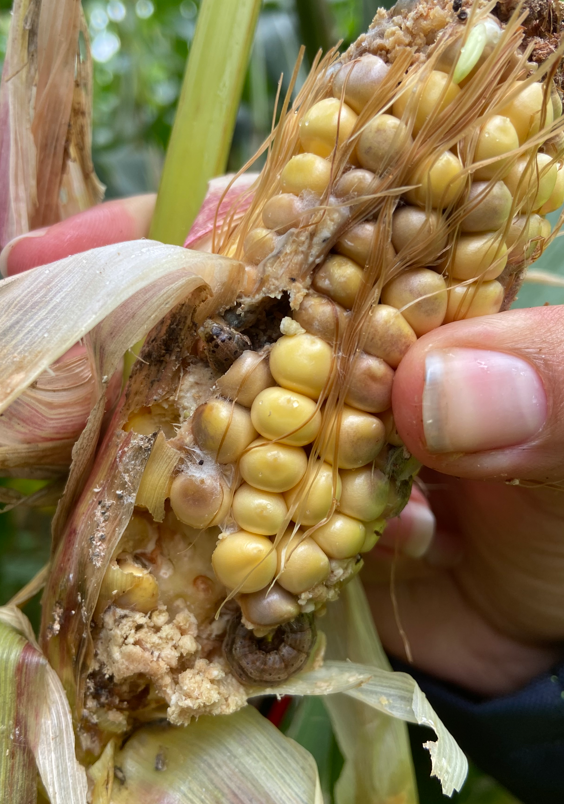
Cobs suffer a reduction in yield and quality when FAW are feeding aggressively.
Pupation Stage
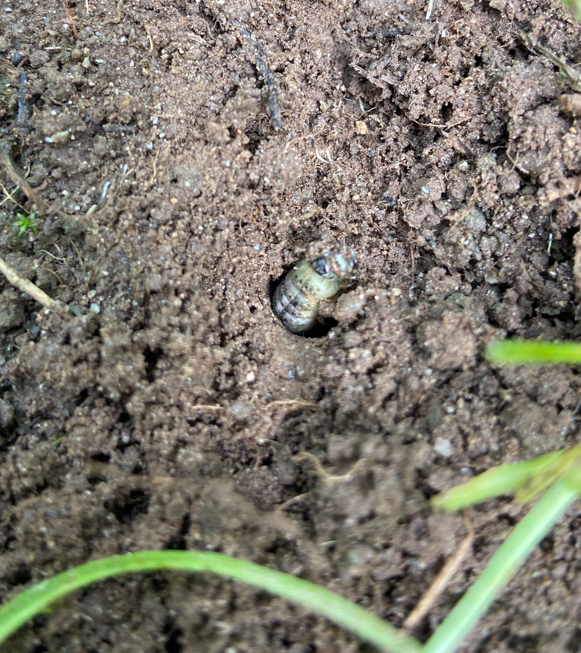
Most larvae burrow under the soil surface at the base of the plant it resided in.
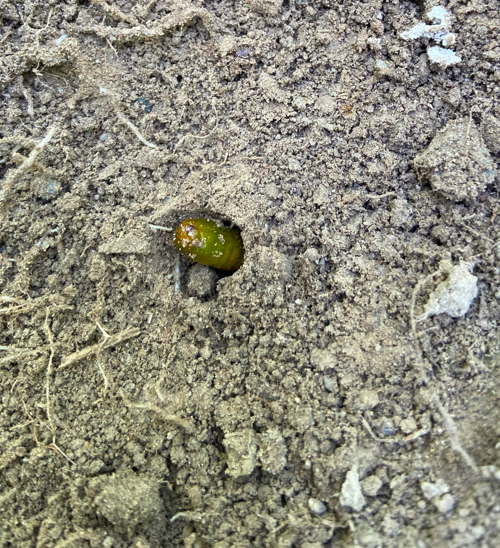
Plants that have fresh frass and damage typical with late instar larva, but with no occupant, may have a pupa under the surface at its base.
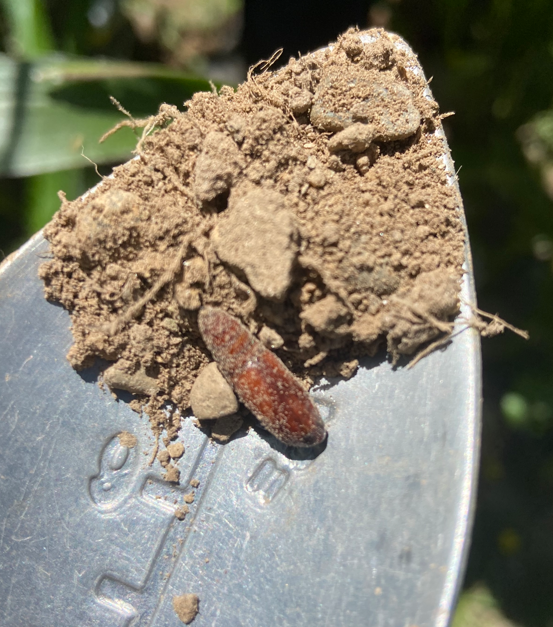
Pupae are often dark reddish brown as they near emerging as an adult FAW moth.
Should I be monitoring my crop?
Crop monitoring is vital for managing pests in maize and sweetcorn effectively. Regular monitoring starts as soon as crops are planted. The most effective crop monitoring tool is crop scouting, which is defined as 'careful continuous observation', where a crop scout walks the whole crop to assess infestations and fresh damage. Crop scouting helps detect pest presence early, preventing significant damage during the vulnerable establishment stage of crops. It enables growers to assess pest populations, identify affected areas, and determine the most effective and timely control measures. Monitoring also supports integrated pest management (IPM) by providing insights into the activity of natural enemies, like Cotesia ruficrus. This ensures that interventions, such as selective insecticides, are used only when necessary, reducing costs and minimising environmental impact. It is also a great opportunity to assess crop status, nutrient requirements, other pests present, and disease and virus pressure, like Northern leaf blight.
How do I monitor my crop?
1. Identify the crop stage and plan the scouting choose a pattern (zig-zag or "W" shape) to cover all parts of the field.
2. Walk the field properly follow the planned path, and stop at regular points across the field.
3. Inspect the plants check several plants at each site for FAW signs:
- Damage on leaves
- Frass (insect droppings)
- Larvae feeding in the whorl or on leaves
- Identify and record the presence of other pest species.
- Observe and record any beneficial species, especially Cotesia ruficrus.
4. Count and record
- Record the total number of plants checked.
- Record the number of plants with FAW damage or larvae.
- Record the size of FAW larvae.
- Record sightings of other pests or beneficial insects.
5. Calculate the percentage use the formula:
- (Number of damaged plants ÷ Total plants checked) × 100
- Example: (24÷150) ×100=16%
6. Compare to the threshold use the threshold table to decide if action is needed
7. Repeat scout crops as often as possible, ideally once a week at a minimum, following a different path each time.
Note: Checking more sites within a crop gives a far better picture of Fall Armyworm infestation than checking more plants per site. The key is spatial coverage—aim for around 50 sites (more for large paddocks, fewer for small ones)— or enough until you are confident you understand the infestation’s spread and severity
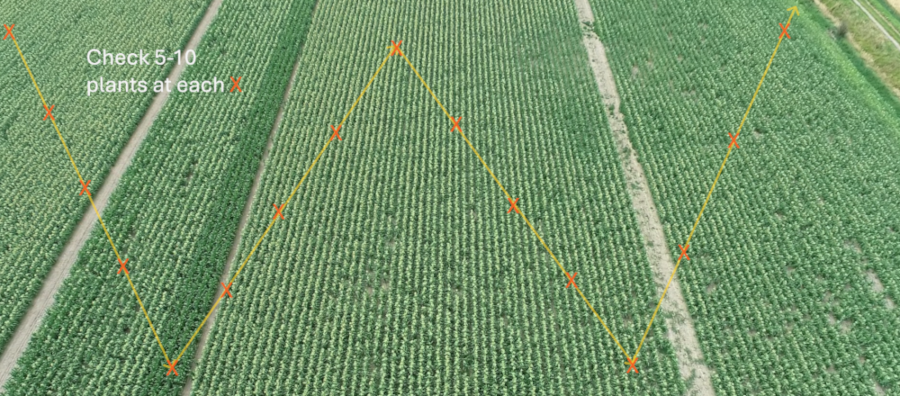
When plants are small and it is easy to move through the crop, we recommend a "W" shape scouting pattern.
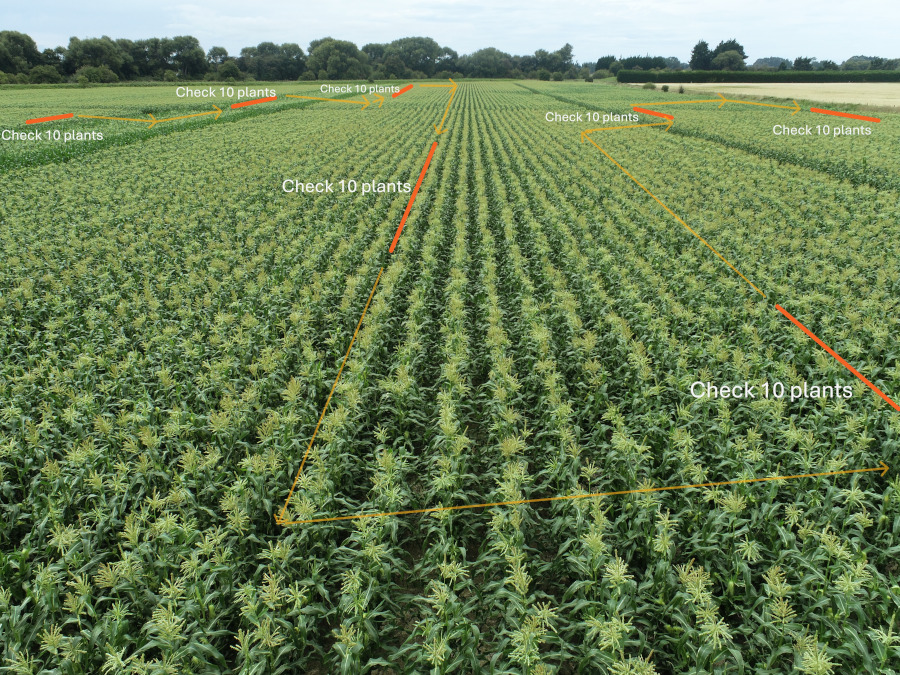
When plants reach the later whorl stage, it can become harder to move through the crop. We recommend a zig-zag-shaped scouting pattern, allowing quicker and more effective coverage of the field.
Monitoring for adult FAW moths
Monitoring pheromone traps
Pheromone Traps as Indicators
- Purpose: Pheromone traps are used to monitor the presence of adult males and provide an early warning of FAW activity in an area. Moth catches in traps indicate the potential for egg-laying and a new generation of larvae in the crop.
- Trap Setup: Traps are typically deployed at or slightly above the crop canopy and baited with synthetic female sex pheromones that attract male moths. Regular monitoring (daily or weekly) is required to assess trends in moth activity.
- Note - Some moth species may have similar chemical compounds in their pheromones, causing them to be attracted to FAW lures. By-catch observed in NZ includes Agrotis ipsilon, Ichneutica semivittata, and Ichneutica mutans
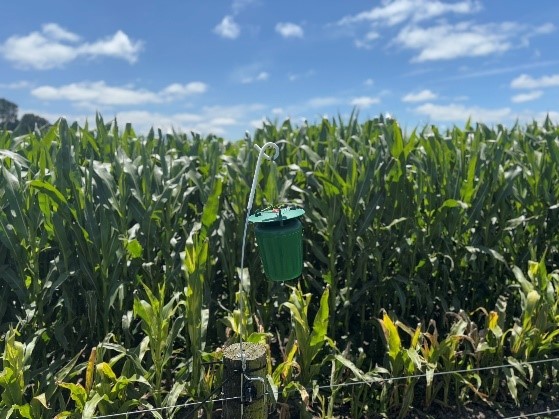
A traditional Noctuid bucket trap with a FAW-specific pheromone
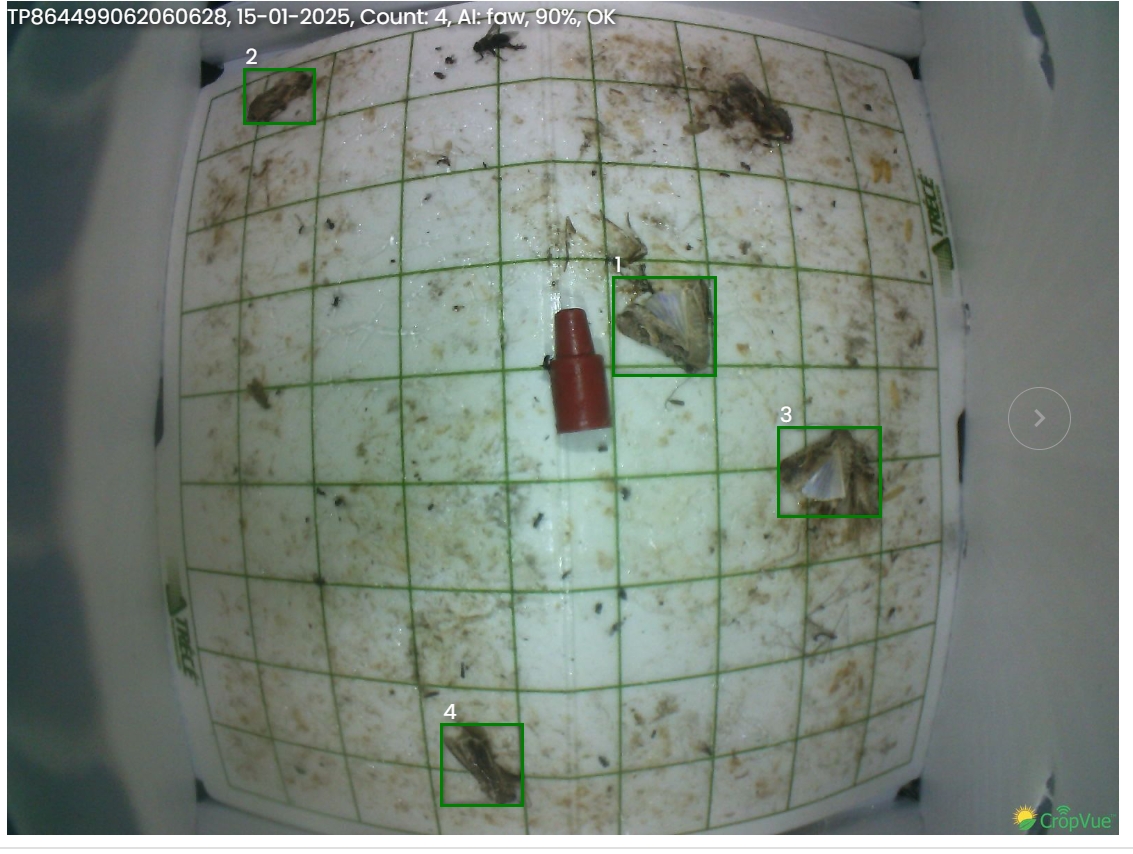
FAW moths are being remotely monitored and identified using a CropVue delta trap.
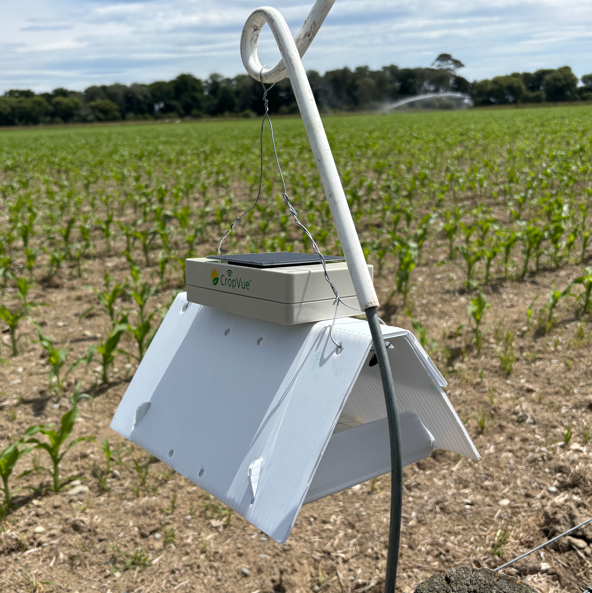
A CropVue Delta trap deployed in a sweetcorn crop uses a FAW pheromone to attract and capture male adult moths on a sticky base. The solar-powered unit transmits a daily photo and uses an AI algorithm to identify male FAW adults.
Why does the size of the caterpillar matter?
Identifying the size of Fall armyworm (FAW) larvae is important for effective targeted chemical intervention because smaller larvae are more vulnerable to insecticides. Early detection of young larvae, typically less than 10 mm in length, allows for more effective control before they burrow into the whorl or cob. As larvae grow larger, they become harder to kill, cause more damage, and may require higher chemical inputs, which increases cost and environmental impact. Accurate assessment of larval size ensures the timely and efficient application of control measures.
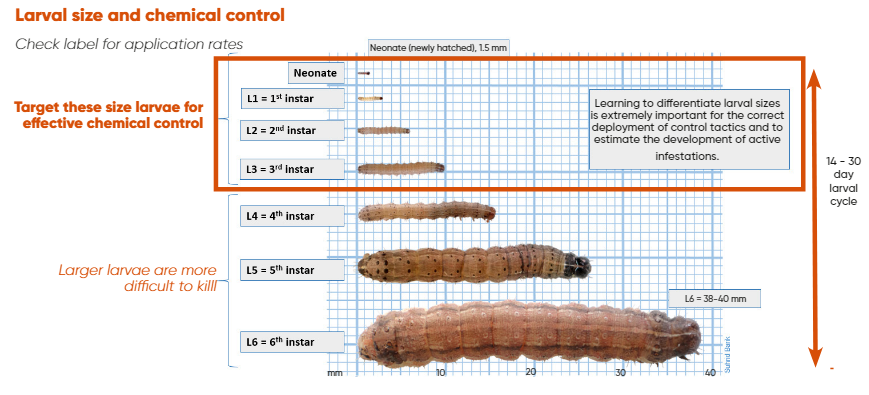
Source: Corteva Agriscience
Economic Thresholds
Economic thresholds are very important in an Integrated Pest Management (IPM) strategy because they help make smart decisions about pest control. An economic threshold is the level of pest numbers or damage at which action must be taken to prevent the pest from causing too much damage and reducing the crop yield in a way that would cost more money than the cost of controlling the pest.
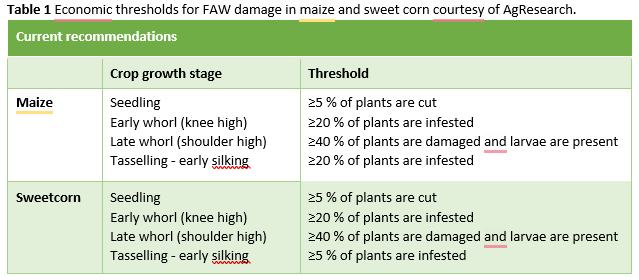
This is the current New Zealand economic thresholds guide developed by Bioeconomy Science Institute (AgR)
What are other similar pests in maize?
Helicoverpa armigera (Corn earworm)
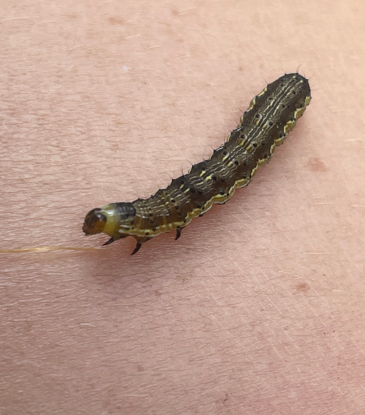
Helicoverpa armigera is a significant maize and sweetcorn pest in New Zealand.
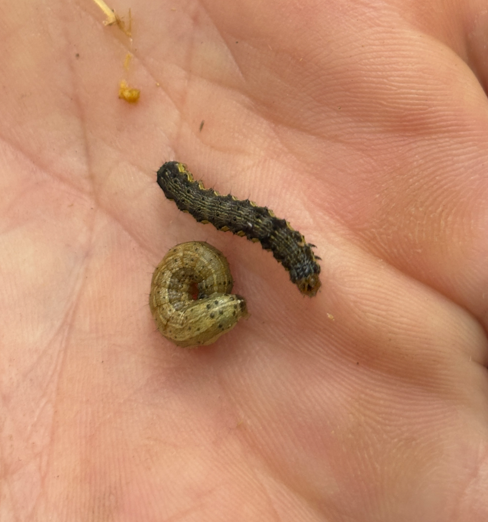
The Corn earworm at the top shows a hairy and diamond-like pattern, it looks spikey in comparison to the FAW larvae below, which also clearly shows 4 pronounced dots in a square shape at its rear.
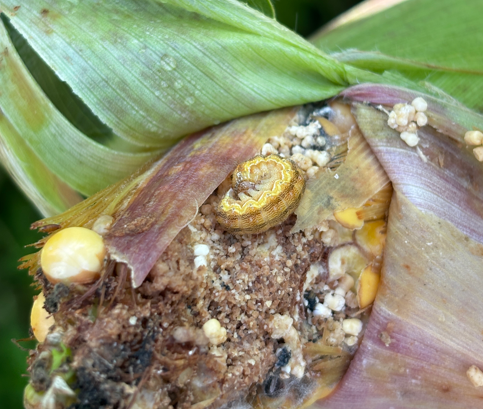
Helicoverpa armigera can vary in colour, appearing green, yellow, black, and even pink. Regardless of the colour, the key to identifying this caterpillar is how hairy and spikey its appearance.
Mythimna separata (Cosmopolitan armyworm)
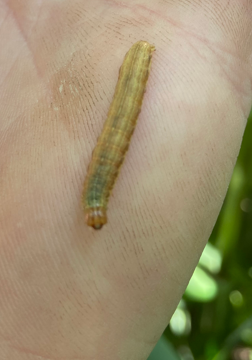
Mythimna separata is a maize and sweetcorn pest common around New Zealand.
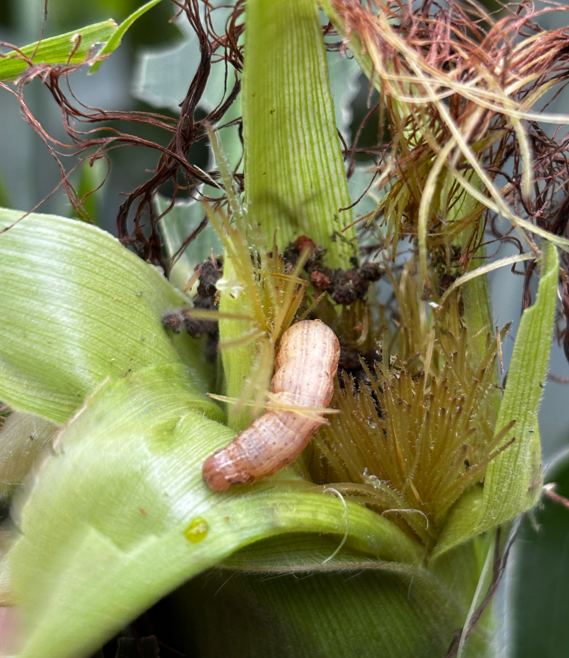
Mythimna separata are foliar feeders, although they will occasionally feed on the silks and tops of cobs. If populations are large, they are capable of completely defoliating crops.
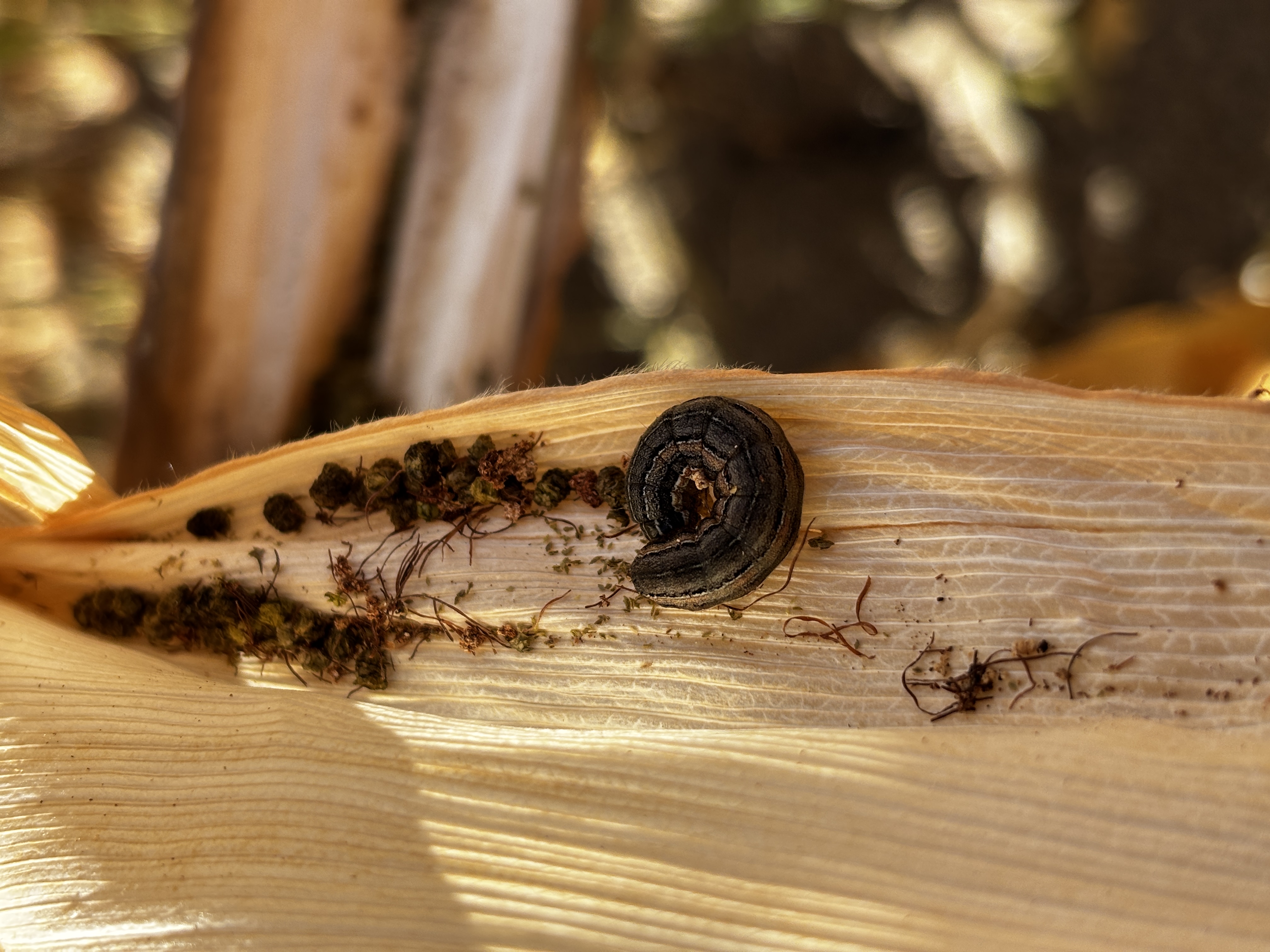
Smooth body appearance – unlike Fall armyworm, the body surface is not rough or spotted and has several light stripes running along the back and sides. The head capsule is light brown and has no clear "Y-shape" like Fall armyworm.
Spodoptera litura (Tropical armyworm)
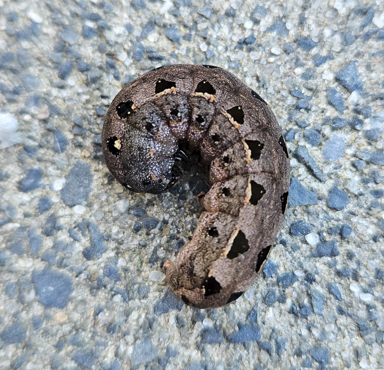
Tropical armyworm is often confused with FAW, it is not normally a maize or sweetcorn pest unless populations are large, normally feeding in the undergrowth, in pasture or in leafy vegetable crops.
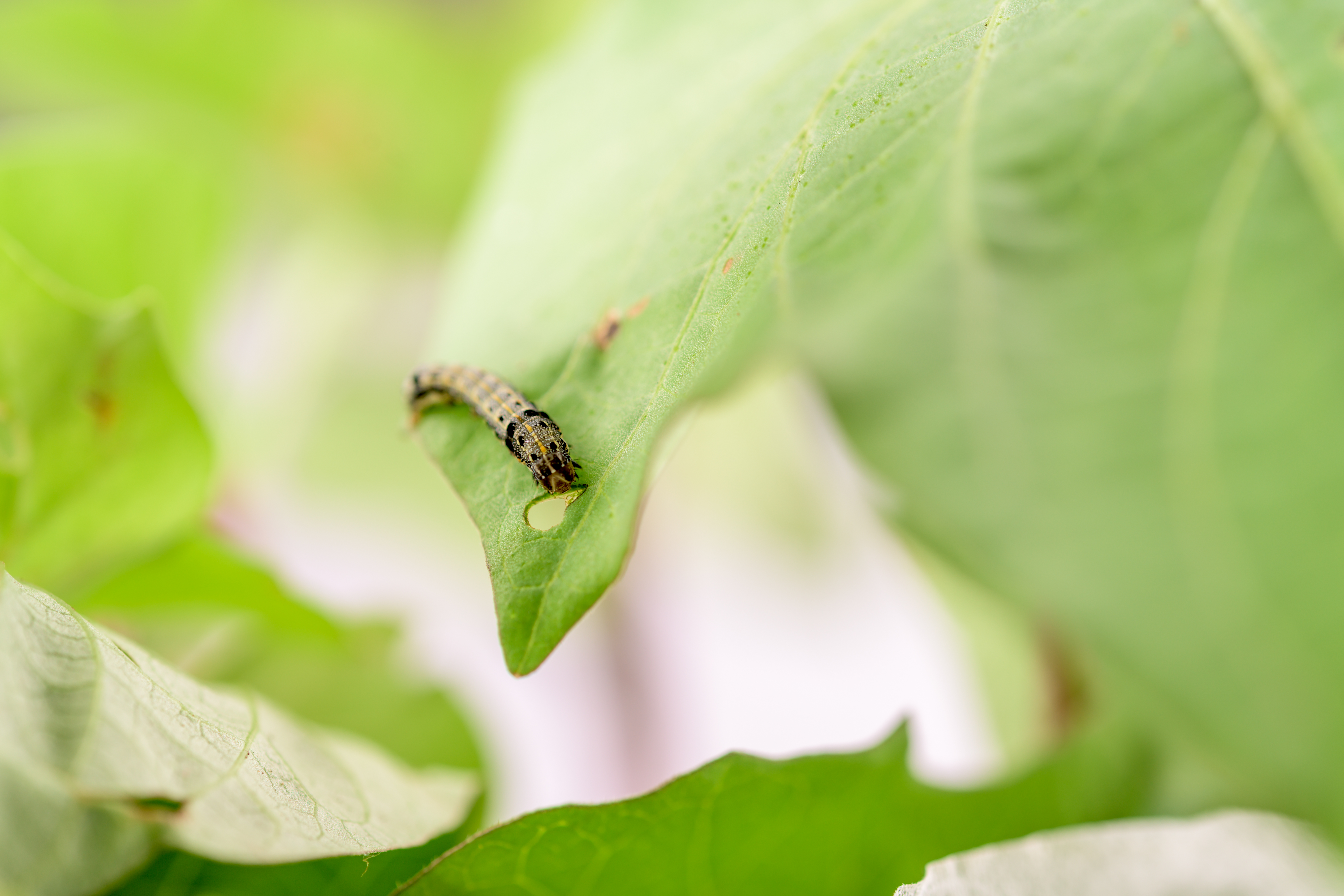
The larvae of tropical armyworm (Spodoptera litura) begin pale green and gregarious, then darken as they grow, showing a yellow line down each side of the back and two distinct white-yellow spots just behind the head. They also have a pale inverted “Y” on the head capsule, similar to fall armyworm, but in S. litura, the “Y” is less sharply defined, making the paired spots behind the head a more reliable distinguishing feature.
Agrotis ipsilon (Greasy cutworm)
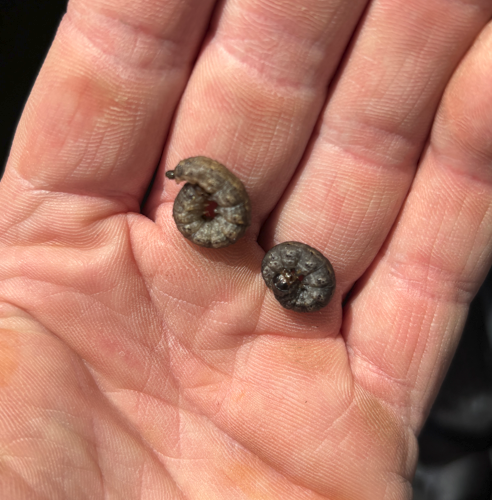
Agrotis ipsilon is found across New Zealand. They are a pest that can cause significant damage to large areas of many newly germinated and established crops.
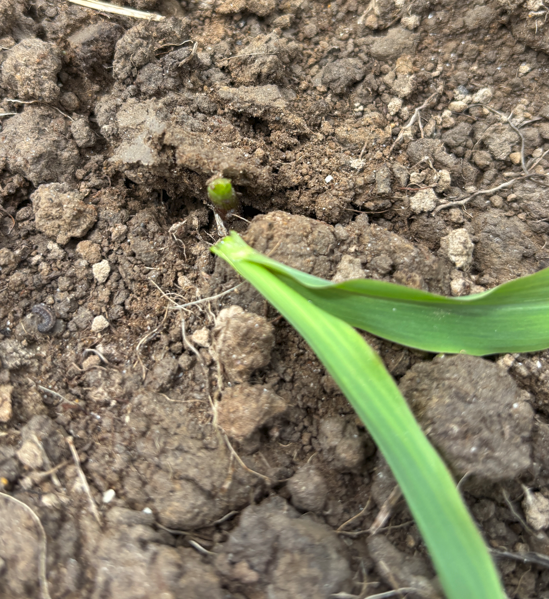
Larvae live under the soil surface feeding on the radicles and shoots of newly germinated seed. They will cut through the stems of newly emerged and established crops giving them their "cutworm" name.
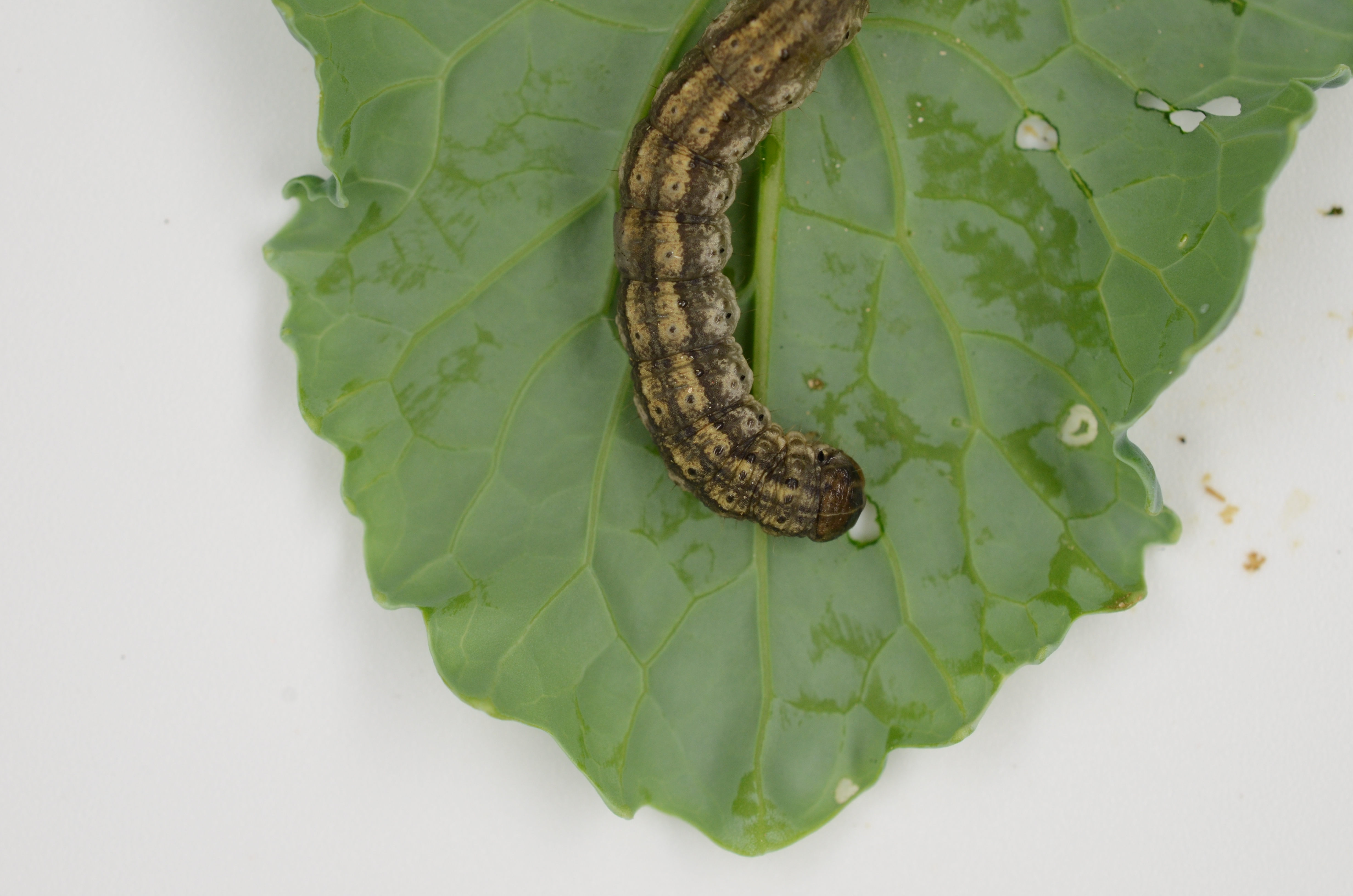
Greasy cutworm (Agrotis ipsilon) larvae are dull grey-brown to nearly black, smooth, and greasy in appearance. They lack the pale “Y” mark seen in armyworms and curl into a tight C-shape when disturbed, which helps distinguish them.
Photo courtesy of Bioeconomy Science Institute (PFR)
What are beneficials?
Let the good guys do the work!
A wide range of beneficial predators and parasitoids contributes to the natural control of Fall Armyworm (FAW) in arable cropping systems, including maize and sweetcorn. These natural enemies can be categorised into resident and transient species. Resident species live within the crop environment year-round, playing a crucial role in controlling pests during crop establishment when the plants are most vulnerable. Transient species, on the other hand, move into the crop only when a pest population is present and serve as an important part of pest suppression.
Predators
Predators, such as spiders, are among the most effective natural enemies of FAW. Spiders can be abundant in maize and sweetcorn systems, preying on a variety of FAW life stages, including eggs and larvae. These predators are relatively easy to spot due to their larger size and active hunting behaviour. Their impact is immediate as they capture and consume their prey directly and may contribute to a significant reduction in FAW populations.
Parasitoids
Parasitoids, such as the wasp Cotesia ruficrus, are less visible but very important in controlling FAW. Cotesia ruficrus lays its eggs inside FAW larvae, and the developing wasp larvae consume the host from within, eventually killing it. This activity often goes unnoticed until the later larvae or pupal stage when the parasitoid creates a bunch of cocoons within or near the remains of the host. These parasitoids can also be monitored by examining host larvae for signs of parasitism or identifying cocoons in the crop.
Integration with Integrated Pest Management (IPM)
IPM strategies aim to maximise the populations of resident beneficial species, such as spiders, while encouraging the activity of transient species like Cotesia ruficrus. With the reduction or withdrawal of broad-spectrum insecticides, it may take time for resident populations to recover and establish, but transient species can readily colonise a crop when FAW is present. Encouraging biodiversity, maintaining habitats, and using selective insecticides can help optimise the roles of these natural enemies in FAW management.
Plant & Food Research has identified Cotesia ruficrus and spiders as key natural enemies of FAW in New Zealand maize and sweetcorn crops. However, many other predators and parasitoids also contribute to the natural suppression of FAW populations, forming a diverse and dynamic system of biological control. This natural management method is a critical component of sustainable FAW control and reduces reliance on chemical insecticides.
Natural predators of FAW
Cotesia ruficrus
To date, this parasitic wasp has been identified by far as the MOST IMPORTANT BENEFICIAL we have for FAW in maize and sweetcorn in NZ.
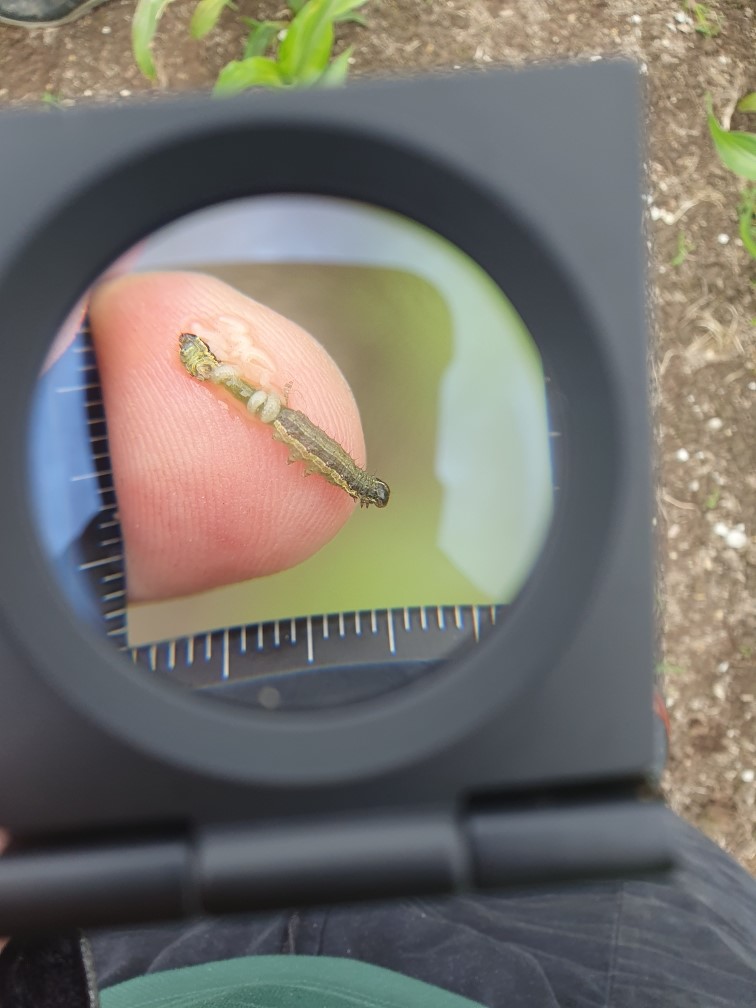
Cotesia larvae found inside a recently deceased FAW.
Source: Daniel Hawkins, Northland Seed & Supplies Ltd
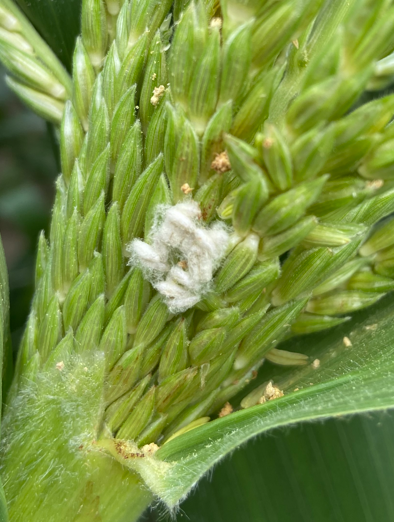
Cotesia ruficrus grow and feed inside the host, killing it, then emerging and form white cotton bud like cocoons that are often spotted in maize and sweetcorn crops.
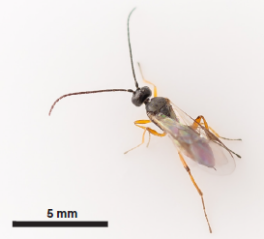
Cotesia ruficrus adult
Photo courtesy of Bioeconomy Science Institute (PFR)
Maize and sweetcorn beneficials
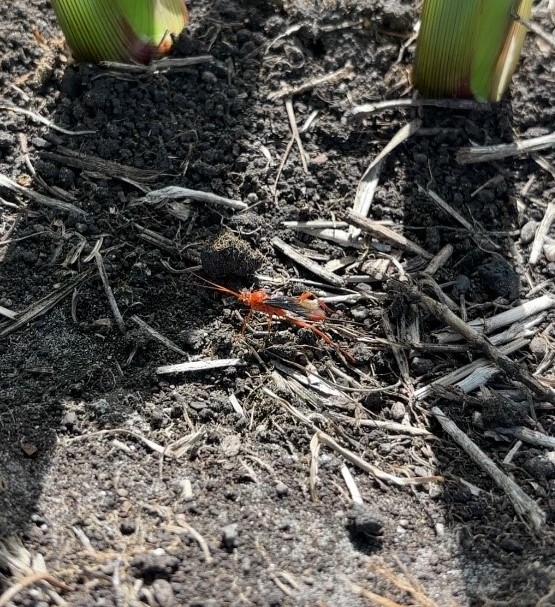
Lissopimpla excelsa, commonly known as the Dusky-winged Ichneumonid, is a solitary parasitoid native to Australia that targets various Lepidoptera pests, including caterpillar species found in maize and sweetcorn crops.
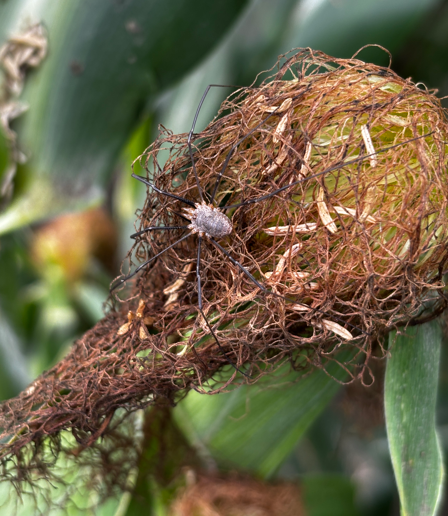
Arachnid species like spiders and harvestmen (pictured above) in maize and sweetcorn crops act as generalist predators, preying on a wide range of insects, including pest species. They help regulate populations of caterpillars, aphids, and other soft-bodied pests by ambushing or actively hunting them.
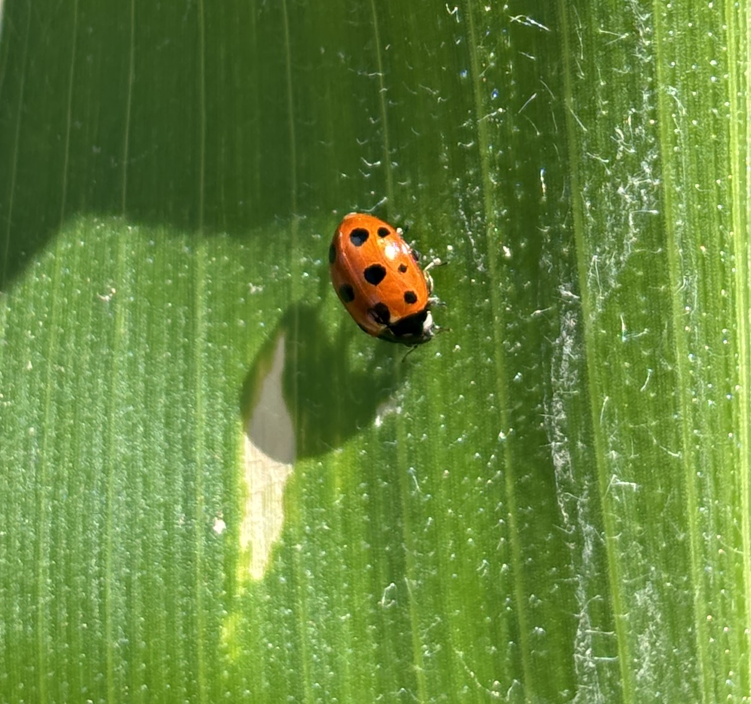
Ladybirds (Coccinellidae spp) are well-known predators in New Zealand cropping systems, playing a crucial role in managing various pest species. While primarily recognised for feeding on aphids and other small insects, some ladybird species prey on Lepidoptera eggs and small larvae.
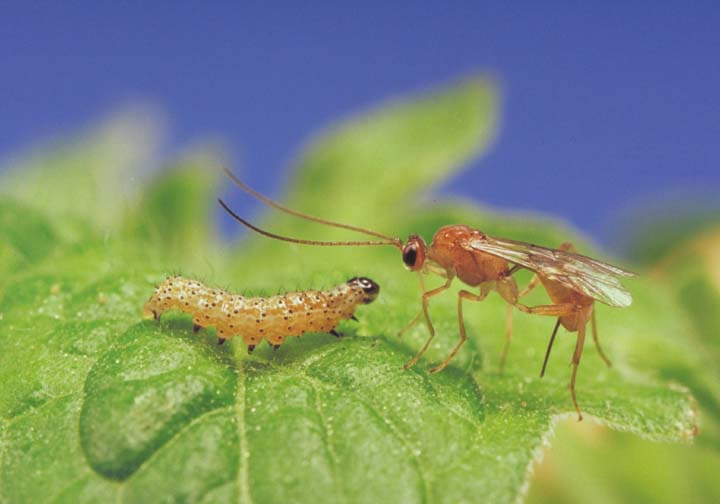
Meteorus pulchricornis,or the Basket-cocoon parasitoid, is a self-introduced generalist parasitic wasp that has been found attacking Lepidoptera pests in New Zealand maize and sweetcorn crops. These parasitoids target a range of caterpillar species, including Fall Armyworm (Spodoptera frugiperda).
Photo courtesy of Plant & Food Research
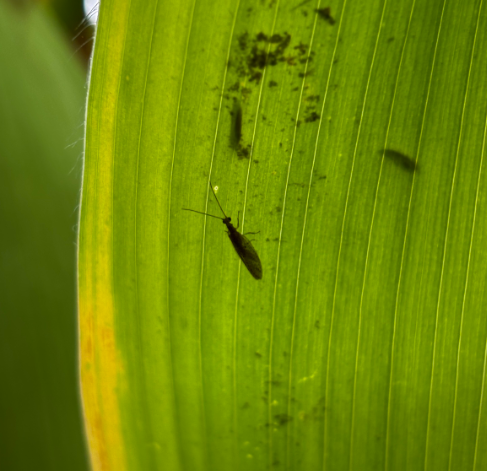
The Tasmanian lacewing (Micromus tasmaniae) is a generalist predator found in New Zealand, known for preying on soft-bodied insects such as aphids, thrips, and small pests. While its primary prey are aphids, it has the potential to consume small caterpillars, including those of pest species like FAW.
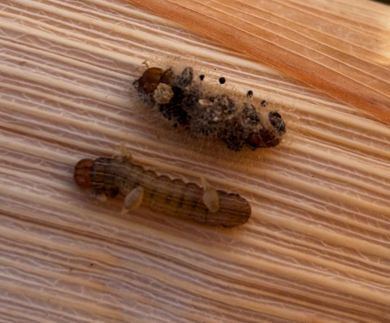
New allies in Maize?
Through careful observations while scouting, we might find we have more help to combat pests than we thought. These Mythimna separata caterpillars have been parasitised by a soon-to-be-identified parasitic wasp.
Fall armyworm resistance management
Insecticide resistance poses a major challenge for the control of Fall Armyworm (FAW) worldwide. In Brazil, widespread resistance has led to the near-total failure of chemical options, creating significant management difficulties. In New Zealand, managing FAW effectively requires not only addressing current infestations but also mitigating the risk of resistance development, which could impact the management of other pests like Helicoverpa armigera (Thebeatsheet)
At present, Sparta™ (spinetoram) is currently the only insecticide registered for FAW control in New Zealand. Evidence from Australia, where FAW populations have been closely studied, indicates that resistance to certain insecticidal Mode of Action (MoA) groups is already established. Since the initial populations in New Zealand are likely to have originated from Australia via wind dispersal, it is reasonable to assume that similar resistance traits are present here. Australian research in 2020–21 revealed moderate resistance to carbamates and organophosphates and high resistance to synthetic pyrethroids (Bird et al., 2022).
Given this context, monitoring resistance in New Zealand populations and adopting proactive resistance management strategies will be crucial. These measures will help ensure Sparta remains effective and prevent resistance from becoming a critical barrier to FAW control in the future.
The most recognised and sustainable insecticide resistance management strategy is the rotation of different mode of action (MoA) groups over time. For more details see: Insecticide Resistance Action Committee | IRAC
Use Targeted Applications:
- Apply insecticides only when pest populations reach economic thresholds to minimise unnecessary use.
- Focus on early instars of FAW, as they are more susceptible than later stages and exposed on leaves.
Integrate Non-Chemical Controls:
- Incorporate biological controls, such as Bacillus thuringiensis (Bt) products, and cultural practices, such as crop rotation and resistant crop varieties.
- Preserve and support natural predators of FAW by minimising the use of broad-spectrum insecticides.
Ensure Proper Application Practices:
- Calibrate spray equipment correctly to achieve uniform coverage and effective control.
- Avoid sub-lethal doses by following recommended application rates and timings as per product labels.
Monitor and Adapt Strategies:
- Regularly monitor FAW populations for signs of resistance development.
- Work with researchers and industry to adapt strategies based on resistance monitoring data.
Future Options:
- A diamide insecticide is currently under review by the Environmental Protection Authority (EPA) for use on FAW in maize and sweetcorn. If approved, this product will provide an additional and much needed different MoA group to improve resistance management and support sustainable pest control efforts.
Insecticide options
When managing Fall Armyworm (FAW) in maize and sweetcorn, it is crucial to consider the impact of foliar insecticides on beneficial insects. Preserving these beneficial species can support long-term pest management by maintaining natural predator populations that help suppress FAW infestations. Selective insecticides are generally less harmful to beneficial species compared to broad-spectrum chemicals. It is important to carefully read product labels and consult other resources before spraying to ensure informed decision-making.
Not all broad-spectrum chemicals directly kill beneficial species, but secondary poisoning is a concern. Beneficial insects, such as predators or parasitoids, may be harmed if they consume FAW larvae or other pests that have ingested or come into contact with insecticides. This underscores the importance of integrating selective insecticides with other pest management strategies, such as monitoring pest populations and supporting natural enemies.
For effective FAW management, consider the role of parasitic wasps and other beneficial insects in controlling early instar larvae. Protecting these species can help delay the resurgence of FAW to problematic levels after an insecticide application, contributing to a more sustainable and effective pest management program in maize and sweetcorn.
On label and recommended for FAW and other noctuid species in maize and sweetcorn
120 g/L Jemvelva® active (Spinetoram)
Sparta™
Mode of Action: Jemvelva® active is active on all larval life stages and enters the insect primarily through the digestive system (ingestion activity) and secondarily through the insect exoskeleton (contact activity).
IRAC Group: 5
Beneficial Impact: Anecdotal evidence suggests this active ingredient is suspected to be harmful to small parasitic wasps
Spray InformationAn effective control when targeting small early instar larvae. Bt's are a beneficial friendly option for a range of lepidopteran species in maize and sweetcorn
Bacillus thuringiensis var. kurstaki
DiPel DF
Mode of Action: Microbial disruptors of insect midgut membranes
IRAC Group: 11
Beneficial Impact: Low Lepidopteran-specific microbial toxin that must be ingested.
Spray InformationUse as a LAST RESORT only
Chlorpyriphos
Multiple generics
Mode of Action: Organophosphate. Has contact and vapour action and also acts as a stomach poison when ingested. Acts directly on the nervous system of susceptible pests.
IRAC Group: 1B
Beneficial Impact: High impact on all insects, very harmful to beneficials.
Spray InformationDO NOT USE any Group 3 products to control FAW
FAW in NZ is likely resistant to all Synthetic pyrethroids
lambda-cyhalothrin
KARATE ZEON, CYHELLA, HALEX CS, LAVRON, TAEKWANDO 250 CS
Mode of Action: Synthetic pyrethroid. Primarily a contact and stomach poison with direct effects on the nervous system of susceptible insect pests.
IRAC Group: 3A
Beneficial Impact: Highly toxic to ALL beneficial insects
Spray InformationVayego® Forte — FOR INFORMATION ONLY
Vayego® Forte is used in Australian crops, including maize and corn, as part of integrated pest management (IPM) programmes. It has undergone trial work overseas for the control of FAW. It is not labelled for use on maize or sweetcorn in New Zealand.
In New Zealand, products containing tetraniliprole are available at different concentrations for use in orchard systems. Any use must follow New Zealand label directions and approvals.
Tetraniliprole 480 g/L
Vayego Forte
Mode of Action: Group 28 compounds modulate insect ryanodine receptors (RyRs), which are calcium channels critical for muscle function. By binding to these receptors, they cause muscle paralysis and cessation of feeding, leading to insect death.
IRAC Group: 28
Beneficial Impact: Low impact on most beneficials, although effects on Cotesia ruficrus are currently unknown.
Spray InformationCoragen® — FOR INFORMATION ONLY
Coragen® is used in Australian crops, including maize and corn, as an important IPM tool and has been widely evaluated in trials for Fall Armyworm control.
Coragen® is not labelled for use on maize or sweetcorn in New Zealand.
In New Zealand, Coragen® is registered for use in a range of vegetable crops. Use is restricted to labelled crops and directions only.
Chlorantraniliprole 200 g/L
Coragen®
Mode of Action: Group 28 compounds modulate insect ryanodine receptors (RyRs), which are calcium channels critical for muscle function. By binding to these receptors, they cause muscle paralysis and cessation of feeding, leading to insect death.
IRAC Group: 28
Beneficial Impact: Harmful to some beneficial insects – particularly some foliage-dwelling predators which may be used in Integrated Pest Management.
Spray InformationAdditional Resources
New Zealand FAW reports
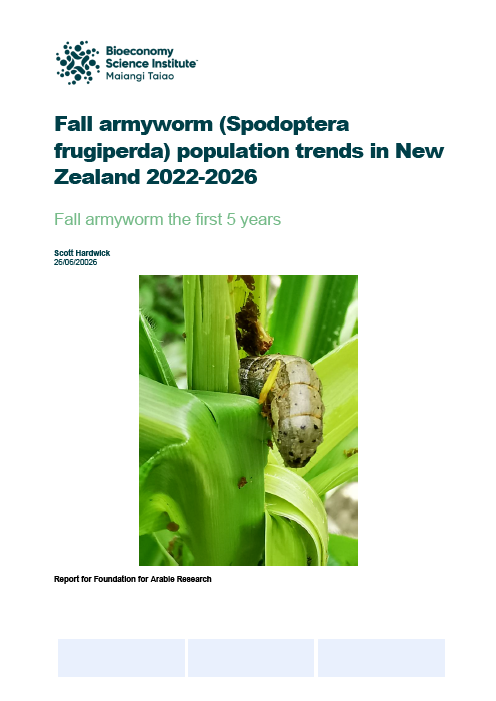
Fall armyworm (Spodoptera frugiperda) population trends in New Zealand
Fall Armyworm (Spodoptera frugiperda) Thresholds for New Zealand Maize and Sweet Corn Growers
FAW Far North monitoring report 2026
FAW Far North Monitoring report 2025
New Zealand resources
Insecticide Resistance Action Committee | IRAC
Vegetables NZ Sweetcorn toolkit
Fall armyworm in New Zealand | NZ Government

 Video Credit: Better Border Biosecurity (B3)
Interested in FAW overseas?
Australia
SE Asia